
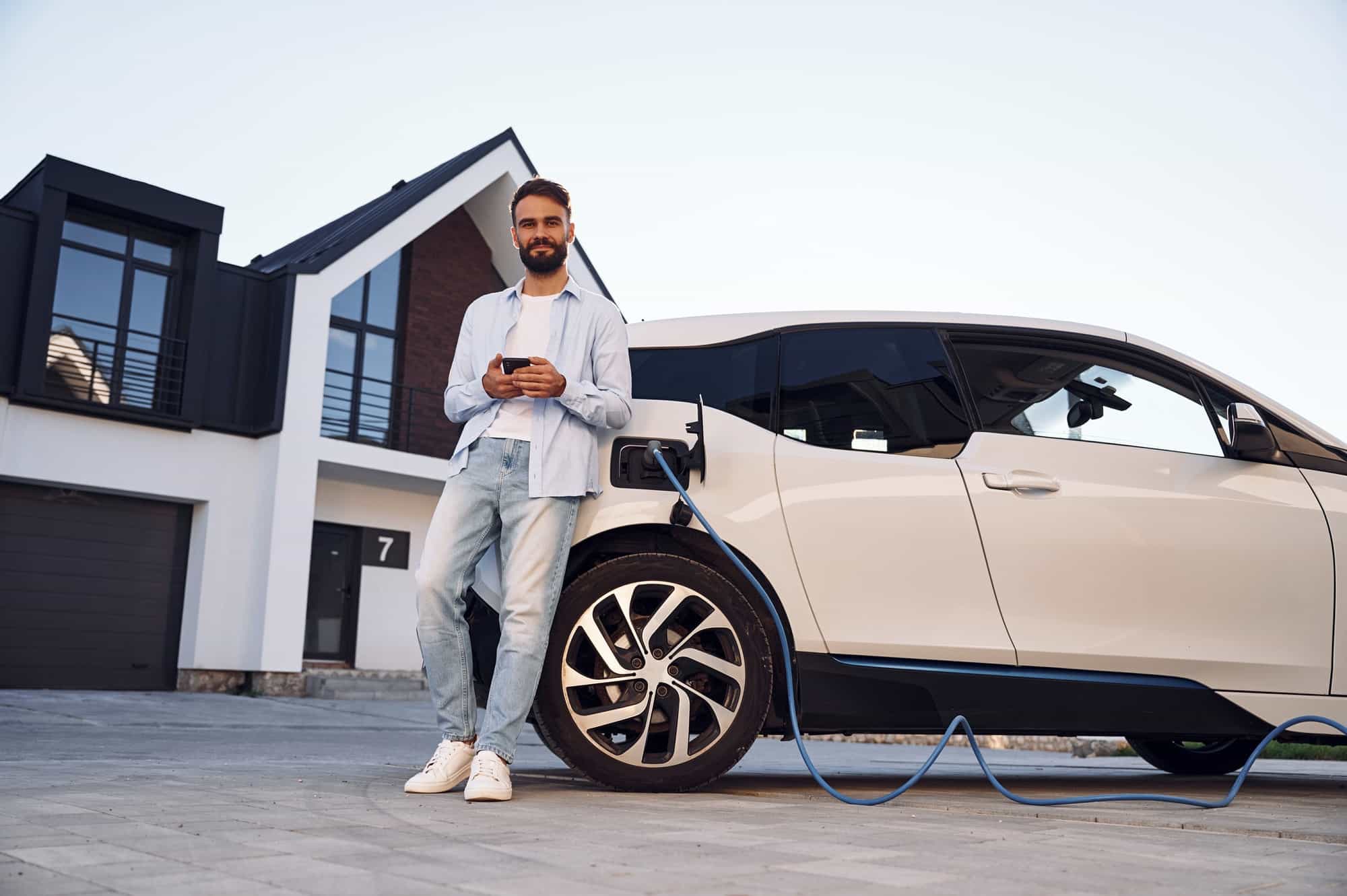
Lately, electric vehicles have gained popularity due to their contribution to reducing greenhouse gas emissions. However, their limited autonomy and the lack of charging infrastructure are often considered as obstacles to their mass adoption. Fortunately, new technological advances could soon solve these problems and make electric vehicles even more attractive to consumers.
One of the biggest concerns for electric vehicle drivers is battery life. Currently, most electric cars have an average range of 200 to 300 kilometers, which limits their use for long journeys. However, researchers are working on new batteries that could double or even triple this autonomy. These batteries use innovative materials and advanced manufacturing techniques to increase energy storage capacity. If these batteries become standard, it would allow drivers to travel further without worrying about frequent recharging.
On the other hand, the lack of charging infrastructure is a major barrier to the widespread adoption of electric vehicles. Currently, drivers must carefully plan their trips based on available charging stations, which can be uncomfortable and restrictive. However, efforts are underway to develop a denser and more accessible charging network. Some companies are investing in fast charging stations that allow drivers to charge their vehicles in just a few minutes. Additionally, wireless technologies are also being explored to enable charging on the go, which would eliminate the need to stop at charging stations.
In addition to battery range and charging infrastructure, battery life is also a concern for many electric vehicle owners. Lithium-ion batteries used in most electric vehicles tend to degrade over time, reducing their efficiency and energy storage capacity. However, researchers are working on new types of batteries that are more durable and resistant to degradation. For example, solid-state batteries are being developed that could offer longer life and better performance compared to current lithium-ion batteries.
In conclusion, technological advances in electric vehicles hold promise for solving some of the key issues that still hinder their mass adoption. Batteries with improved range, denser charging infrastructure and more durable batteries are all developments that will make electric vehicles even more attractive to consumers. With these improvements, electric vehicles could become a viable and environmentally friendly alternative to traditional gasoline-powered cars.